
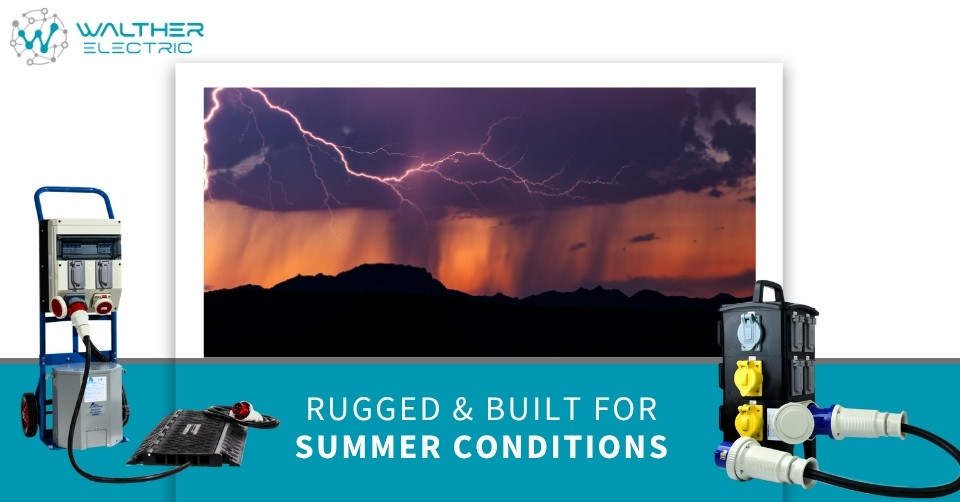
Temporary power systems deal with harsh conditions year-round, but summer introduces a unique mix of heat, storms, moisture, and heavy demand.
Cables sit in direct sunlight for hours. Connectors end up in wet grass or muddy areas. Outdoor crews push to stay ahead of the weather, changing schedules, and expanding workloads.
Under those conditions, small setup issues escalate.
A system that looked clean and organized during setup can quickly become harder to trace, troubleshoot, and maintain once the jobsite gets busy. Cable paths shift, connections see more handling, and temporary fixes have a way of becoming part of the permanent workflow.
The question is not whether a system can deliver power; it is whether that system can continue operating safely and reliably once real-world conditions start working against it.
Heat Changes How Temporary Power Behaves
High temperatures, direct sun exposure, long cable runs, and heavier electrical loads all contribute to heat buildup across temporary power systems.
In many cases, these factors do not lead to a single dramatic failure. Instead, that summer heat tends to accelerate smaller problems that become harder to manage over time:
- Overheated connectors
- Damaged insulation
- Loose or contaminated connections
- Cables that become stiff, brittle, or harder to handle after repeated exposure
This is where equipment designed for outdoor deployment holds up and proves its value. Connectors built with sealed cable entry systems, UV-stabilized housings, and secure locking mechanisms help temporary power systems hold up better under repeated handling, outdoor exposure, and extended summer deployments.
Rain and Wet Conditions Expose Weak Points Quickly
Summer also brings storms, wet ground, humidity, and rapid weather changes.
A connection that works perfectly indoors can become a liability once rain, dust, or standing water are factored in. That is why outdoor-rated distribution equipment is built differently from the start.
NEMA 3R Indoor/Outdoor Enclosures
Walther Electric’s Portable Power Distribution Units (PDUs) are available with rugged, weather-resistant molded rubber enclosures designed for temporary outdoor use. Many configurations also include weather covers over GFCI and other receptacle types to help protect connections from rain and debris between uses.
IP67 Watertight Connections
Many of Walther’s IEC 60309 Pin & Sleeve Devices are available with enhanced ingress protection for wet and demanding environments. Environmental sealing is achieved through features like external cable glands and ring-shaped bayonet locking systems that create a seal between the plug and outlet.
Safe. Rugged. Reliable by Design.
Environmental protection is not just about keeping water out; it is also about building devices that can survive repeated handling and outdoor deployment without becoming unreliable over time. Features like spring-loaded gasketed covers and matching retaining systems in Walther’s IEC devices help prevent accidental disconnects during use — and every single PDU includes dedicated mini circuit breakers for individual outlet protection, helping crews isolate problems faster and maintain safer distribution in the field.
These details are a result of Walther’s intentional, innovative designs built from decades of engineering products for repeated outdoor deployment, harsh environments, and the realities of day-to-day jobsite use.
Summer Workloads Push Temporary Systems Further
Summer also tends to mean larger workloads. And as temporary power systems grow, they also become harder to organize.
More cables create more traffic hazards, greater opportunity for damage, and extra troubleshooting when something goes wrong. Temporary additions that seemed manageable early on can quickly turn into cluttered cable paths and difficult-to-trace distribution later in the project.
Systems that use organized distribution points, cable protection, labeled connections, and properly planned routing are much easier to expand and troubleshoot as workloads increase — especially when crews are working under tight schedules and changing site conditions.
Built for the Conditions You Actually Work In
Temporary power systems are expected to move, expand, and adapt as conditions change. Summer simply accelerates the wear, exposure, and challenges that crews already deal with every day.
That is why outdoor-rated distribution equipment, protected connections, and organized power layouts matter long before something fails. The right temporary power setup does more than deliver electricity — it helps crews maintain safer, cleaner, and more reliable systems throughout the busiest part of the season.
Ready to explore further? Learn more about F. Walther Electric Corporation and our parent company, WALTHER-WERKE, browse our product catalogs and technical brochures, or view specifications and available configurations in our online shop.